Summary
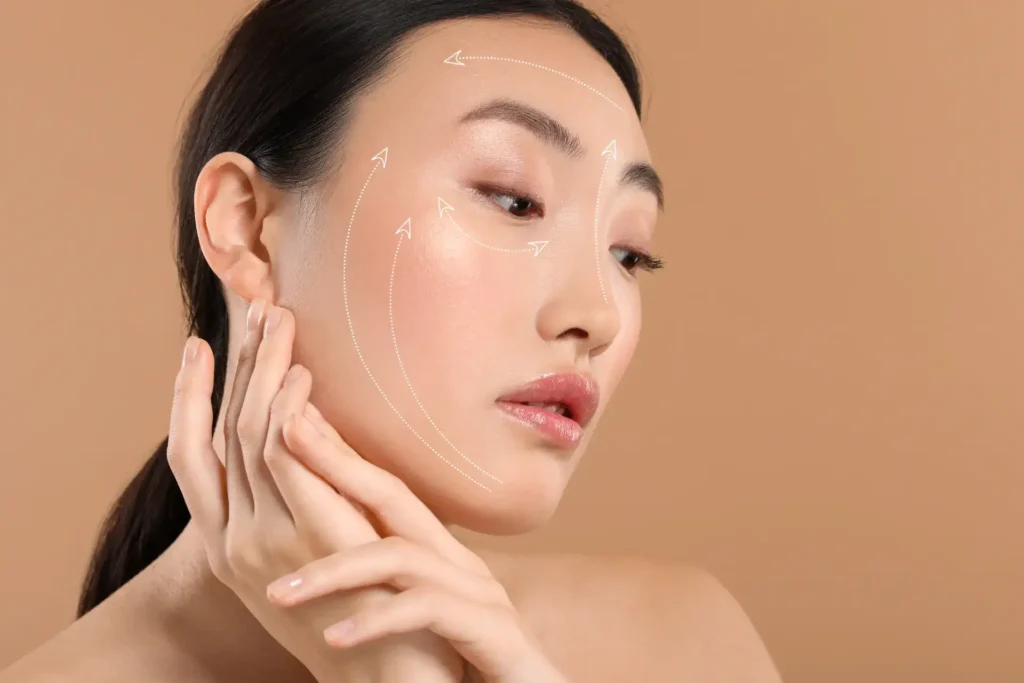
A persistently tired face is more often structural than lifestyle-related — bone loss, fat redistribution, and collagen decline all begin in early adulthood and do not respond to sleep or skincare.
Collagen production declines by around one to 1.5 per cent per year, reducing skin firmness, elasticity, and the ability to hold position against gravity.
Each tired-looking feature has a distinct cause: hollow under-eyes reflect volume loss and orbital widening; jowls reflect descending fat and skin laxity; heavy brows reflect elasticity loss and muscle pull.
Different treatments address different problems: dermal fillers restore volume, thread lifts reposition tissue, and skin boosters improve hydration and texture.
A combination approach is likely to produce a more complete result than any single treatment, but the right plan depends on your anatomy and specific concerns.
You’ve followed all the advice: getting more sleep, drinking more water, and managing your stress. So why do you still look so exhausted?
For many, a tired-looking face has less to do with their lifestyle and more to do with what is quietly happening beneath the skin.
Understanding what is actually driving the change is the first step towards doing something about it.
Why Do Some People Look Tired Even When They're Not?
A tired appearance is often structural rather than situational. The shape of your face, the position of your brow, the hollow beneath your eyes — these are anatomical features that can make you look fatigued regardless of how rested you are.
Lifestyle factors such as sun exposure, smoking, stress, and poor diet do compound the problem, accelerating changes that might otherwise develop gradually. But when the underlying cause is structural, no amount of sleep or skincare will change it.
What Changes in Your Face As You Age
Facial ageing is not a single process. It involves simultaneous changes at different depths, which is why addressing only one of them rarely produces a complete result.
The Facial Skeleton
The deepest layer of change is the bone itself. With age, the eye socket widens slightly, the midface loses bony support, and the jaw resorbs (shrinks back). This loss of skeletal foundation is what causes the overlying tissues to descend and sag, even when the skin and fat compartments are otherwise intact.
The Fat Compartments
The face contains distinct pockets of fat that provide structure and volume. With age, these redistribute and migrate downward, hollowing the temples and cheeks while adding weight to the lower face. The result is a shift from the rounded, evenly distributed fullness of youth to a heavier, less defined appearance at the jaw and jowl.
The Skin
Collagen production declines by approximately one to 1.5 per cent per year, making skin progressively thinner, less firm, and less able to hold its position over the structures beneath it. Elastin loss compounds this, reducing the skin’s ability to spring back after movement or compression.
Ethnic And Anatomical Variation
Research suggests that Asian faces tend to show volume loss in the midface and under the eyes particularly early, with bone resorption and laxity patterns that differ from Caucasian faces. Individual anatomy also plays a role, meaning the layer that drives visible ageing varies from person to person.
If you are unsure which of the above is driving your concerns, schedule a consultation with Dr Ram at Line Aesthetics. He’ll help you tell what is worth addressing.
What's Causing Each Tired-Looking Feature?
Each feature has a distinct structural origin, which you can compare in the guide below..
Feature | Primary cause | Why it reads as tired |
Hollow under-eyes | Volume loss and orbital widening | Shadow beneath the eye creates a persistently fatigued look |
Sunken mid-face | Downward fat migration, deepened nasolabial folds | Loss of cheek highlight makes the face appear dull and drawn |
Sagging jawline and jowls | Skin laxity and descending fat | Blurs the jaw-to-neck transition; shifts the face to a bottom-heavy shape |
Heavy brows | Skin laxity and muscle pull | Descended brow hoods the eyelid and reduces the appearance of alertness |
Dull, dry skin | Reduced HA levels and slower cell turnover | Uneven texture and lost radiance compound the appearance of age and fatigue |
Treatments That Address A Tired-Looking Face
Dermal Fillers For Volume Loss
For dermal filler treatment, doctors in Singapore typically use hyaluronic acid (HA) gels to restore lost volume and improve facial contour. Fillers may help address under-eye hollows, a flattened midface, deepened nasolabial folds, and reduced chin or temple projection.
Results typically last six to 18 months and are reversible using hyaluronidase, an enzyme that dissolves HA.
Thread Lifts For Sagging Features
A face, eye, or nose thread lift uses fine, dissolvable sutures made from PDO (polydioxanone) or PLLA (poly-L-lactic acid) to reposition sagging tissue. As the threads dissolve over six to 12 months, they also stimulate collagen production.
Results typically last one to three years. The procedure usually takes 15 to 45 minutes with minimal downtime.
Wrinkle-Relaxing Treatments For Facial Balance
Botulinum wrinkle treatment works by temporarily reducing the activity of targeted facial muscles, helping soften existing expression lines and smooth areas that appear tense or overactive. It does not add volume or lift tissue, but can meaningfully improve overall facial balance when used alongside other treatments.
Commonly treated areas include forehead lines, frown lines between the brows (glabellar lines), crow’s feet around the eyes, and a brow lift to address the downward pull of muscles contributing to eyelid hooding.
Results typically last up to six months, with maintenance treatments usually recommended every four to six months
Skinboosters For Dull, Dry Skin
Skin boosters treatment involves injecting hydrating and regenerating agents into the dermis to improve moisture, texture, and skin quality from within. Formulations may include:
Hyaluronic acid (HA) for deep hydration
Polynucleotides (PN/PDRN, derived from salmon DNA) to support skin repair and regeneration
PDLLA (poly-D, L-lactic acid) to encourage longer-term collagen production
Amino acids, antioxidants, vitamins, and minerals to support overall skin health
Most plans involve three sessions spaced four to six weeks apart.
Here is a table to help you compare and contrast the different treatments:
Treatment | What it addresses | What it does not do | Typical duration |
HA dermal fillers | Volume loss, hollow under-eyes, flattened midface | Does not lift tissue or improve skin quality | 6–18 months |
Thread lift | Sagging cheeks, jowls, brow, neck | Does not replace volume or smooth expression lines | 1–3 years |
Skin boosters | Dull, dry, crepey skin; hydration and texture | Does not lift or add structural volume | 6–18 months |
A combination approach targeting volume, laxity, muscle activity, and skin quality together is likely to produce a more comprehensive result than any individual procedure alone.
Ready To Understand Your Options? Talk To Line Aesthetics
Not sure where to start? You don’t need to have all the answers before you reach out.
Dr Ram Nath is an aesthetic physician with over 25 years of experience in facial rejuvenation in Singapore — from dermal fillers and thread lifts to non-surgical facelift options — and will walk you through what is driving your concerns and which treatments are most likely to help.
Get in touch to arrange a consultation at Line Aesthetics.